What Music Really Teaches Your Child
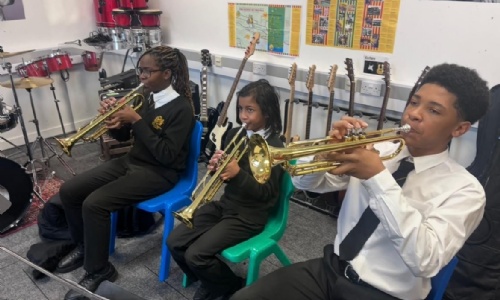
Why Music is a rigorous academic subject that builds skills for life, learning and future success.
In some communities, Music is still dismissed as “not important” rather than recognised as a serious, rigorous academic subject. This view is outdated — and it underestimates the powerful role Music plays in children’s education.
Music is a valued skill set. It develops discipline, fine motor control, resilience, communication, and cognitive flexibility — the same transferable skills consistently seen in highly successful individuals, including doctors, lawyers, scientists, engineers, CEOs, and leaders across many fields.
Music does not make someone a doctor or a scientist. Neither does Maths, Science, or English on their own. What truly matters is how students learn, what skills they develop, and the quality of teaching they receive. In these areas, Music education is exceptionally strong.
Parents are often reassured by subject labels — “Maths is important because it’s Maths” or “Science is important because it’s Science.” But a subject is only as effective as the teaching and the student’s engagement. Knowledge that cannot be clearly communicated, understood, or applied is not education — it is information.
Music, Maths, and Science are not separate silos — they are deeply connected. In Music, students work daily with fractions, ratios, patterns, timing, and proportional thinking, reinforcing mathematical understanding. At the same time, Music draws on core scientific concepts such as sound waves, vibration, frequency, pitch, amplitude, resonance, and acoustics. Students experience these ideas physically and aurally long before they encounter them abstractly in Science lessons.
For many children, Music is where difficult concepts finally make sense. Fractions, ratios and wave behaviour become real when they are heard, felt and performed — not just written on a page.
Beyond academics, Music develops life skills few subjects integrate so completely. Regular practice builds discipline and consistency; performance develops confidence; ensemble work strengthens listening, collaboration, and communication. Instrumental study refines fine motor skills and precision — qualities essential in medicine, science and technical professions.
A strong education does not ask, “Is this Maths, Science or Music?” It asks, “What skills is my child developing, and who is teaching them how to learn?” Music answers that question powerfully.
Parents and carers interested in learning more can read the full What Music Really Teaches Your Child article on our website, where the research and ideas introduced above are explored in greater depth:
https://www.basildonloweracademy.org.uk/what-music-really-teaches-your-child
G.Stoddard - Music and Performing Arts Lead and Creative Arts Lead